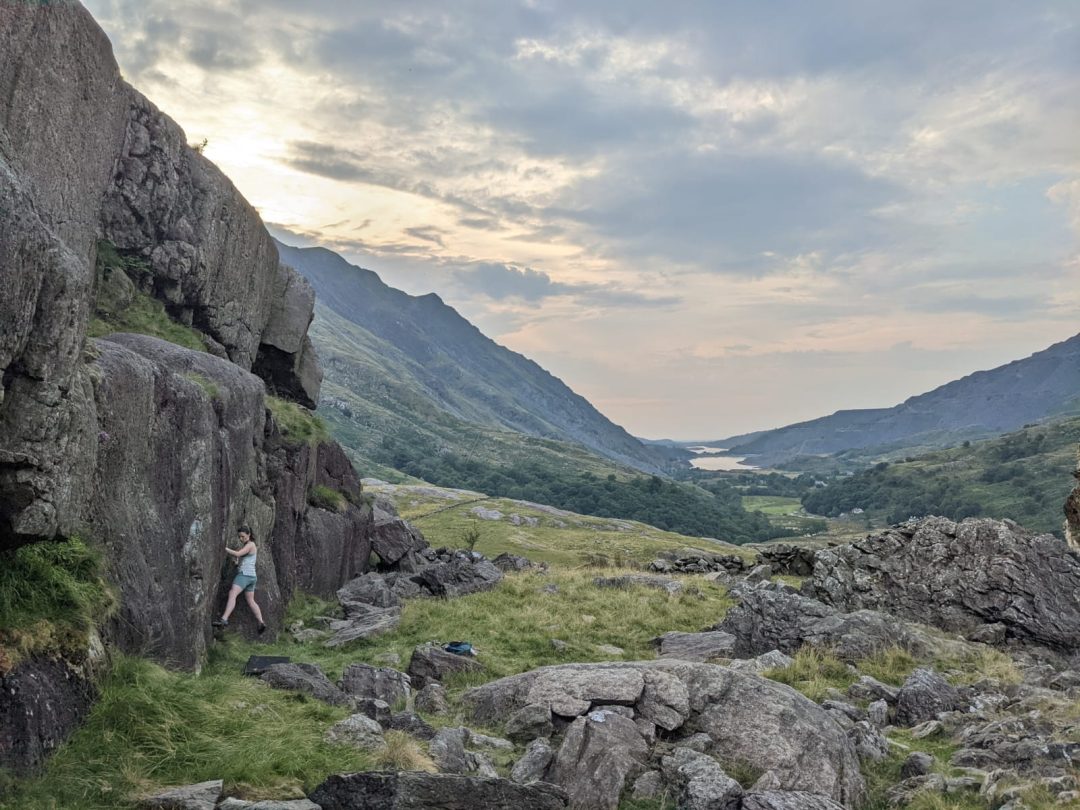
As someone who is 5ft2 on a good day and afraid of heights, climbing is not the most natural sport for me to enjoy, but I love bouldering, and I’m in the gym most weeks. However, when the UK gets its rare dry day, we like to pack the car full of climbing pads and head for an outdoor climbing session.
Now, outdoor bouldering is basically a completely different sport from indoor gym bouldering at this point. It’s also super humbling. If you’re competitive like me, it can get you down or frustrated at first, but it shouldn’t. So, here’s what I wish I knew before bouldering outside.
Top outs are the worst
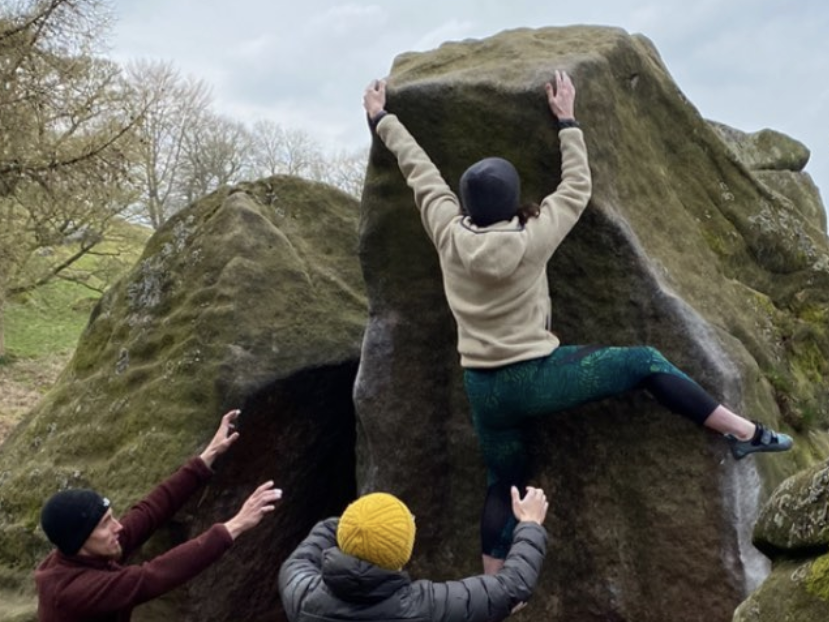
First things first, one of the major things that indoor climbing walls don’t prepare you for is top outs. There are only a handful of climbing gyms that have top-out walls (where you go over the top of the wall). When you’re outdoors, the vast majority of boulder problems finish with a top out. The exception is for large walls and quarries where there’s usually a break in the rock for a match and a climb down.
Trying to haul yourself over a lip when you’re three or four metres off the ground with a small pad below can feel stressful. Whether you’re tapping around for an okay hold or you’re trying to fling a high foot to help you get across, it’s one of the most anxiety-spiking parts of climbing outside, at least for me. It’s always worse when you try to grab a hold and just get clumps of moss or grass instead from overgrowth!
Traverses circumvent this, largely, but it’s best to start practicing on smaller rocks or training your manteling skills indoors at a variety of heights. It’s a climbing skill like any other, and you just have to get used to it or opt for lowball traverses instead, which are limited.
Spotting isn’t catching
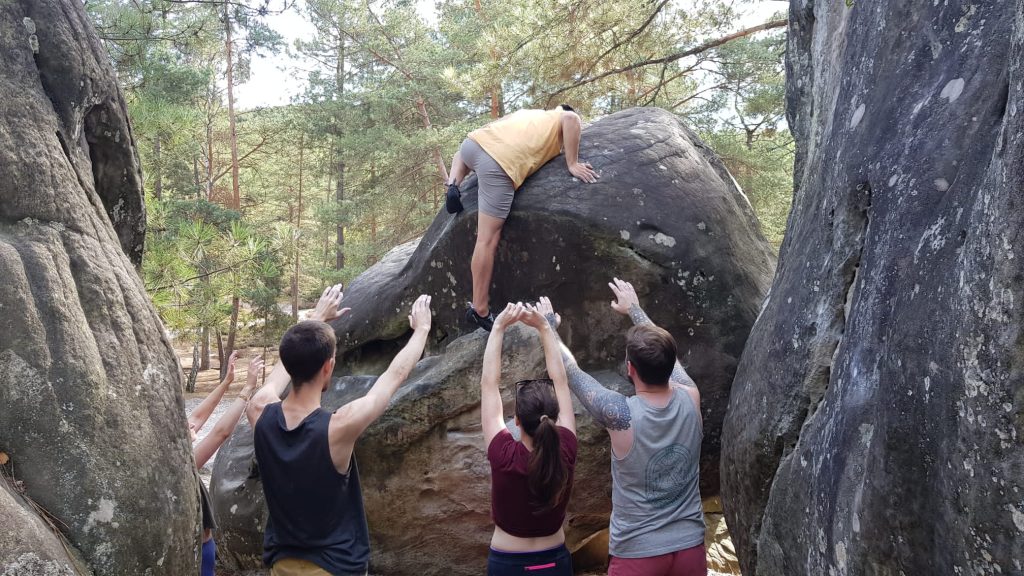
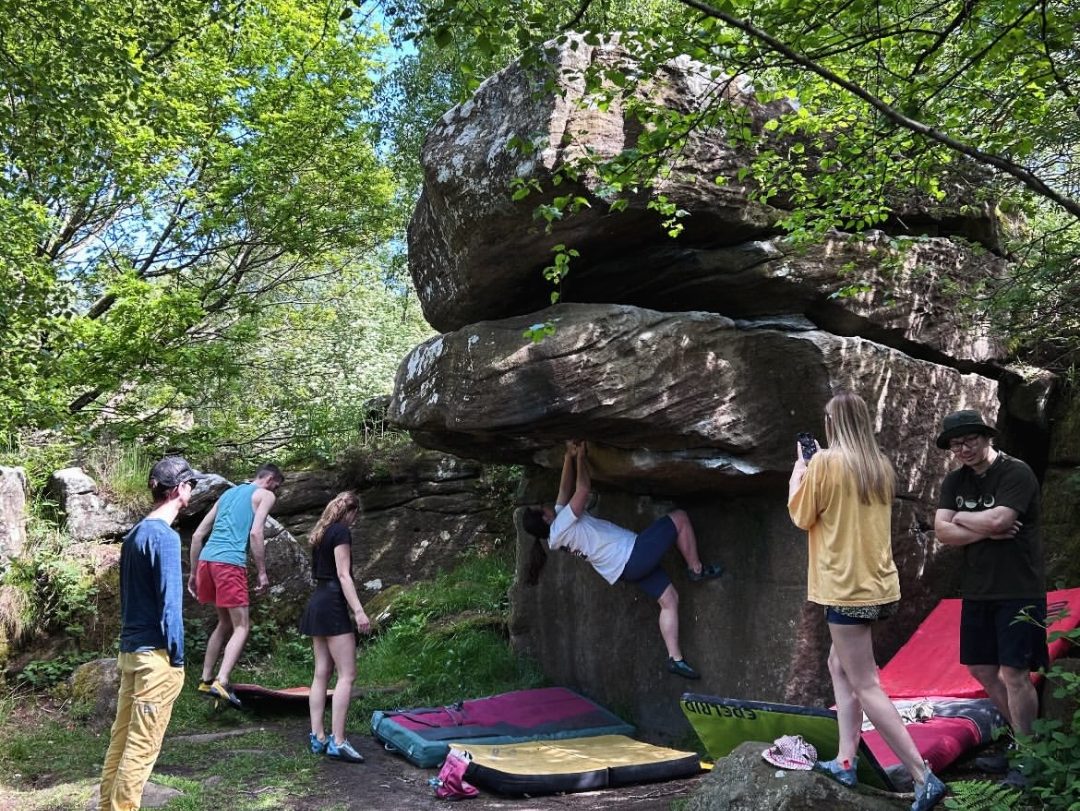
Unlike indoor bouldering, outdoor bouldering uses spotters. These are people gathered around the bouldering mat with their arms up, looking like they’re going to catch the person if they fall. However, as a spotter, you don’t catch the person; you push them onto the mat.
Trying to catch someone is usually way more dangerous for both the climber and the spotter. However, when you’re climbing, you might swing out away from the mat, and the spotters need to direct your flying body towards a softer landing.
Mat positioning is an art
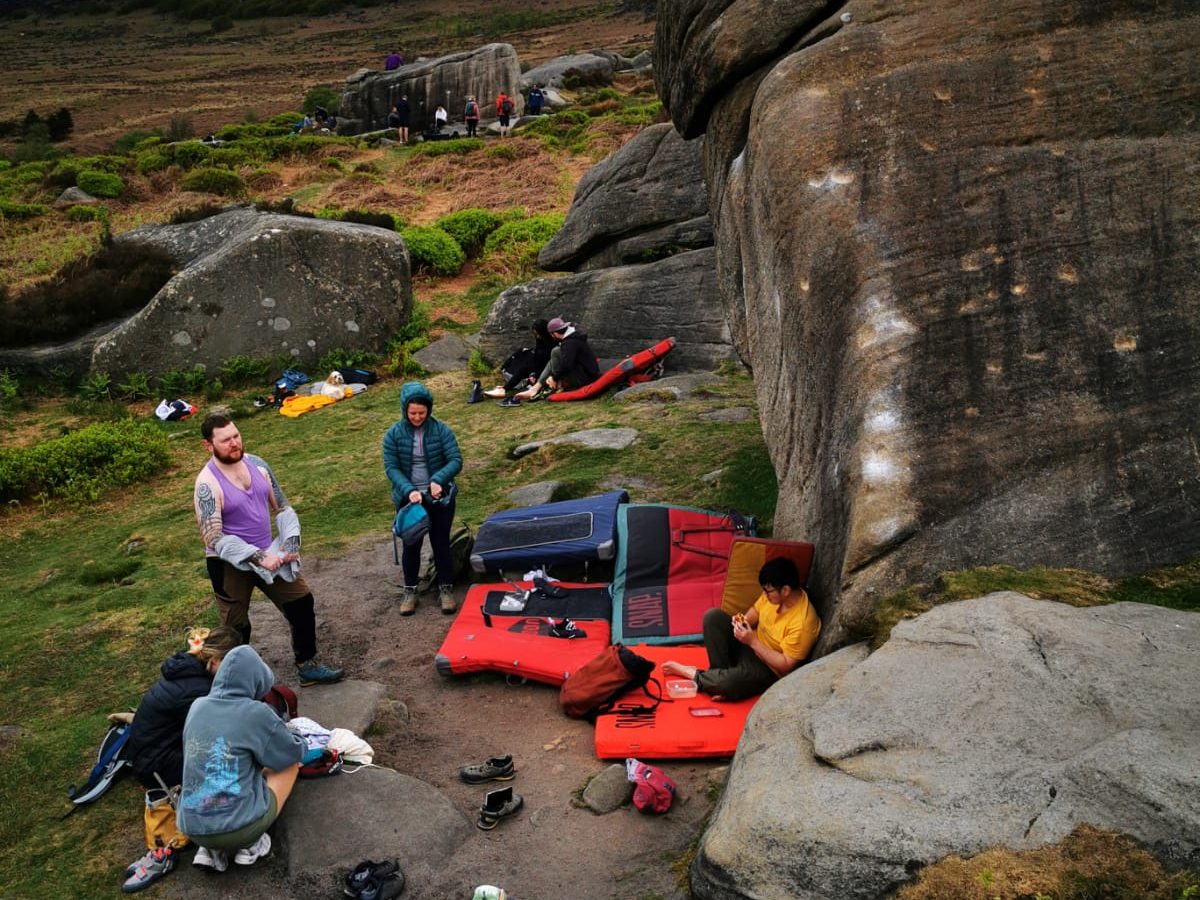
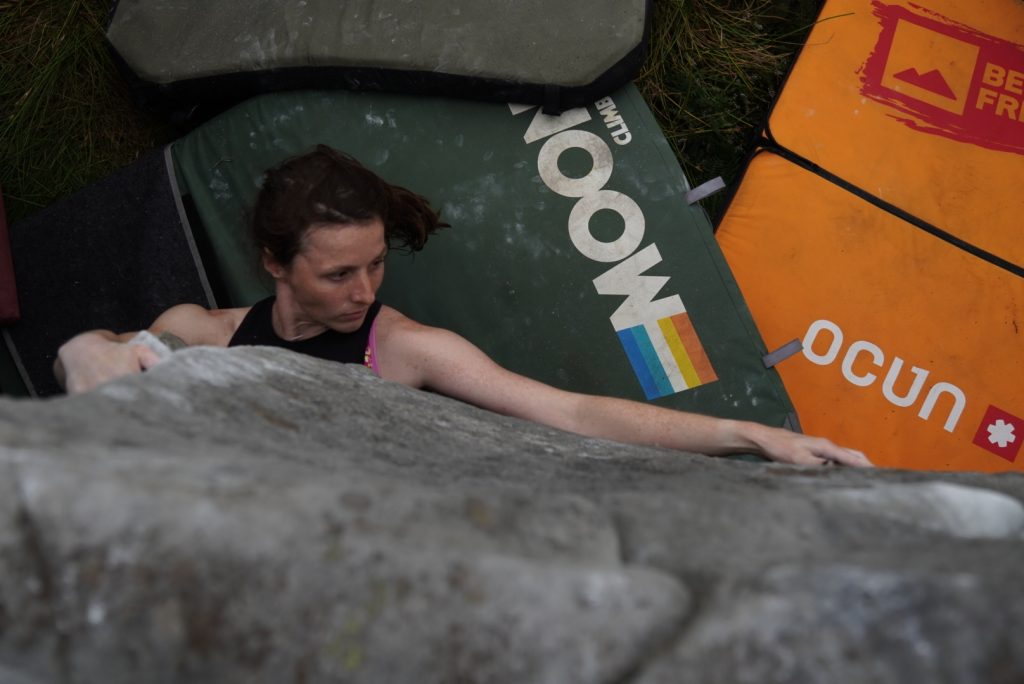
Boulder pads or mats are an integral part of climbing outdoors. If you don’t have any, you can usually hire them from your local climbing gym or from climbing stores like Alpkit. Positioning mats underneath a problem is definitely an art. Outdoors, the floor is rarely flat, with rocks, tree roots, and boggy patches to cover. Not only do they need to cover the potential fall area, you also need to pad around in case of a rogue move.
As well as keeping an eye on the climber, a spotter needs to keep moving the pads throughout the climb to make sure your friend is covered in case of a fall. Point the handles towards your spotters to make the quick dragging motions easier and quicker.
Your skin is going to get destroyed much quicker
While fresh plastic holds at indoor gyms can wreck your hands quickly, if you’re climbing outdoors on gritstone in the Peak District, your hands are going to get destroyed much quicker. You need to be tactical about your climbs, rest more in between, and make sure you have plenty of protective hand balms for after your session.
ClimbCare is a UK-based brand by GB paraclimber Steve Harper, and they have an amazing range of all-natural hand balms, specifically developed for climbers. Their tallow balm is super nourishing with shea butter, hemp seed oil, jojoba oil, and beeswax, and they also have vegan climbing balms and bug-bite balms if you’re climbing in an area with a ton of midges!
Your route reading needs to level up
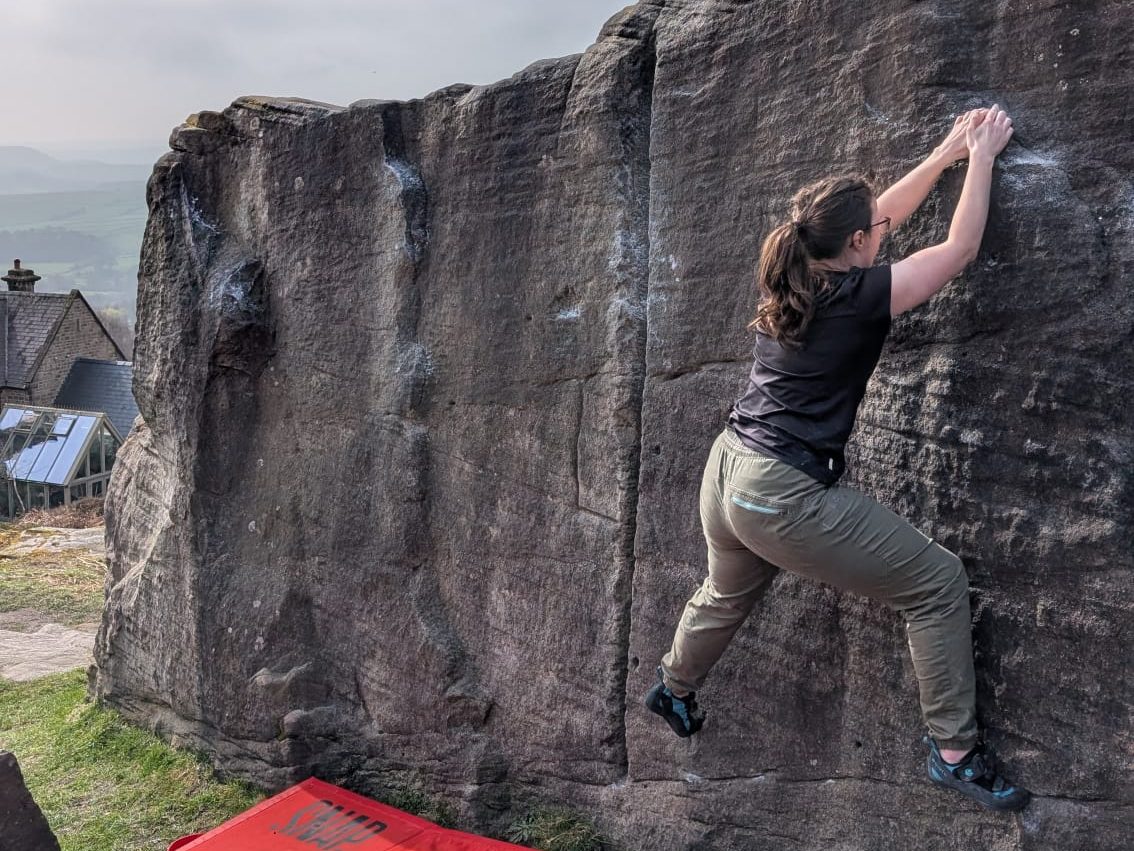
When you first arrive at an outdoor crag, a lot of the time, it’s going to seem like a sheer face with no discernible hand or foot holds. While the guidebooks point you in the right direction, trying to identify a tiny polished pebble of a foothold on a slab is not always the most fun. However, when you finally unlock the sequence, it’s so much more satisfying than reading a route indoors.
Generally, route reading is a lot harder outside. You also might find that certain holds have broken off or features have shifted over the years. There’s one crag that I’ve been to in North Wales where the ground is basically a sinkhole, so the sit start that a couple of the routes require is pretty much impossible unless you’re a giant.
Guidebooks are your best friend
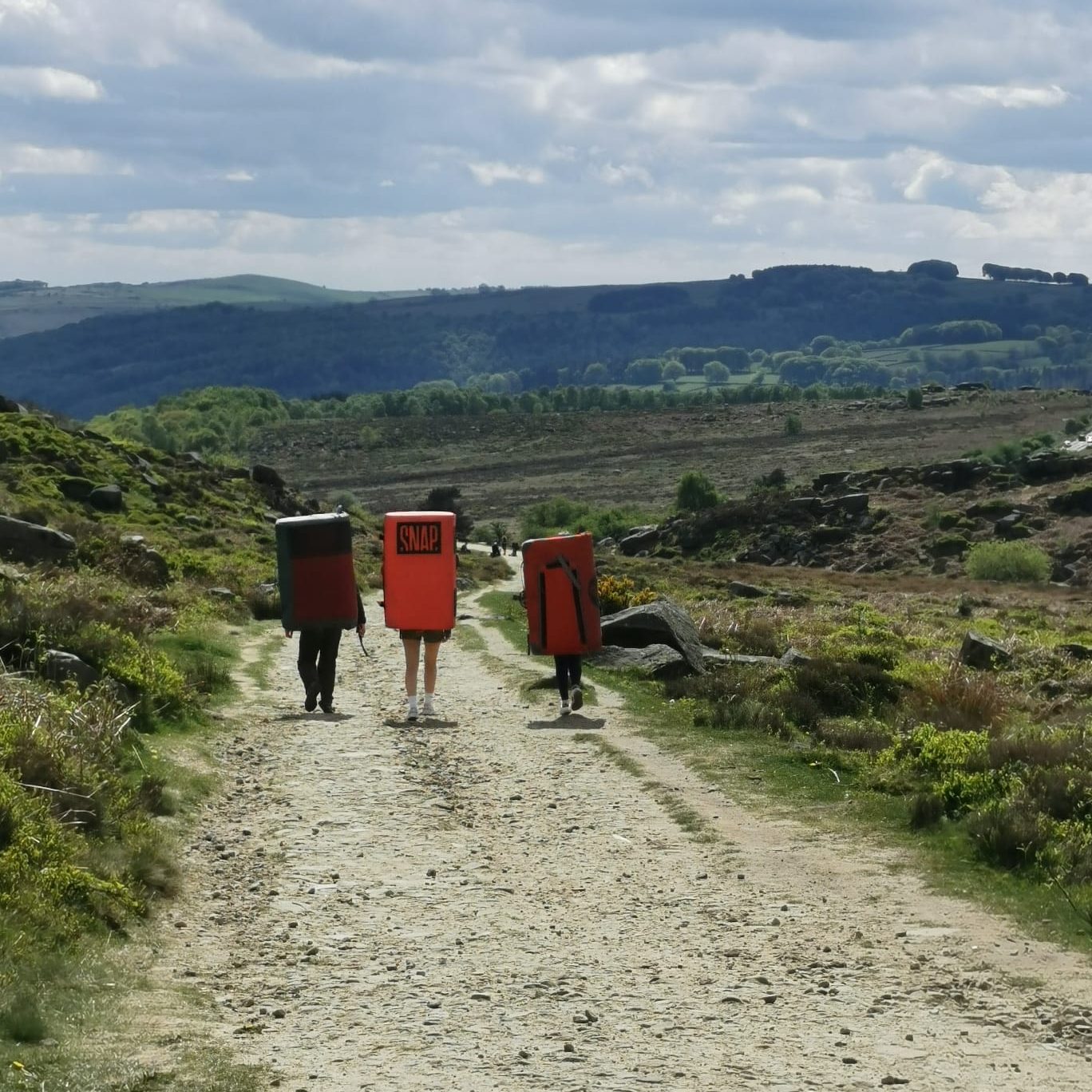
Before you get in the car and head to the crag, make sure you have a guidebook or a topo downloaded on your phone. Climbs are easily discernible without one and you want to know what you’re climbing, what grade it is, and which holds are included and, more importantly, which aren’t.
As with bouldering pads, you can usually hire guidebooks from your local climbing gym or buy yourself a copy if you’re going to be climbing outdoors in that specific region a lot. Try to get the most up-to-date guidebook as they do change, grades shift, and they’ll detail new access rules to the crag.
A tea towel is a must-pack essential
Now, most people probably wouldn’t automatically pack a tea towel for a climbing session, but outdoors, it’s a game-changer. When you top out or come off a climb, you might have to walk across muddy or wet ground in your climbing shoes to get back to the mats or a place to sit. When you want to go back on the wall, you need to wipe the bottom of your shoes down so they’re not slippery.
An old tea towel is perfect for this, and you can keep one in your pads for safekeeping. It’s also good if you’re climbing on a warm day and your hands are getting clammy between goes.
We’re here for the snacks
On the whole, climbing outdoors is much more chill than climbing indoors. You’re likely going to be at the crag all day, rather than a few hours, you’re soaking up the sunshine, and enjoying the great outdoors. One of the most important packing decisions is the snacks. You need enough fuel, but you don’t want anything too heavy.
Also, a giant flask of coffee is a must to keep morale high. If you’re not having a good climbing session, sitting on a boulder pad in the sunshine with birds singing and a huge, packed lunch sandwich solves a lot of problems.
You probably won’t top as many climbs, and that’s okay
Climbing outside is harder than indoors for the majority of people. There are no purpose-built holds for your hands; the weather conditions play a huge role, and the mental game with the landings is another consideration. Grading is also wildly different depending on your region and even down to the individual crag.
You might get double-figure climbs indoor and you might only get three or four climbs under your belt outdoors. I’ve had days outdoors where I haven’t completed a single climb. Sometimes I end up making up traverses, sometimes I’m just working on sections of a project. It all takes time, and the toll on your skin and brain is a lot harsher outside.
If I knew this going in, I probably wouldn’t have been quite so frustrated in my first few sessions outside. Climbing outside is so satisfying and a great way to spend a day outside, pushing yourself. However, knowing these things before I went outdoor bouldering for the first time might have better prepared this anxious novice boulderer for a great time!

As another 5ft1 indoor boulderer who’s been too nervous to try outdoor bouldering, this post feels like it was written just for me. The tip about practicing manteling skills early at the gym is such a helpful hack I never would’ve thought of on my own.
I’m also 5’1 and terrified of heights, and thought I was ready for outdoor bouldering after 6 months of indoor climbing. Getting to my first outdoor top out completely humbled me, this is such an accurate breakdown!
The contrast between feeling comfortable bouldering indoors and facing outdoor problems on a rare dry UK day really resonated. I’d also love to hear which tips helped most with managing the height anxiety when climbing outside.
The reminder that outdoor bouldering feels very different when you’re 5ft2 and wary of heights really resonated. I especially appreciated the practical reality of cramming the car for one of the UK’s rare dry days—weather and preparation clearly matter as much as the climbing itself.
As a fellow short climber, I appreciate the honesty about being 5ft2 and still making the most of outdoor bouldering. The UK’s rare dry days make packing the car feel like a tactical operation, so I’m keen to hear what gear and preparation made the biggest difference outside.
The combination of being 5ft2 and afraid of heights makes your love of bouldering especially relatable. I’m curious whether outdoor sessions have changed how you approach route selection compared with the gym, particularly when those rare dry UK days finally arrive.
The contrast between being 5ft2, afraid of heights, and still making the most of outdoor bouldering is relatable. I especially appreciated the reminder that a rare dry UK day can turn into a full car-pack and climbing adventure—just with a lot more preparation than a gym session.