If you’re looking for sustainable transport around Europe, then chances are you’re probably on the trains, interrailing about. While sleeper trains are getting more common in Europe, a new Swiss company, Twiliner, has launched Europe’s first sleeper bus with lie-flat seating. Of course, this is a huge development for flight-free travel in Europe, so I had to go and check it out. Here’s my honest review of Twiliner.
Disclaimer: I went on a press trip with Twiliner; however, this blog article is not a part of any commercial deal.
Where Does Twiliner Go?
As it’s a relatively new company, Twiliner only has two routes (at the time of writing).
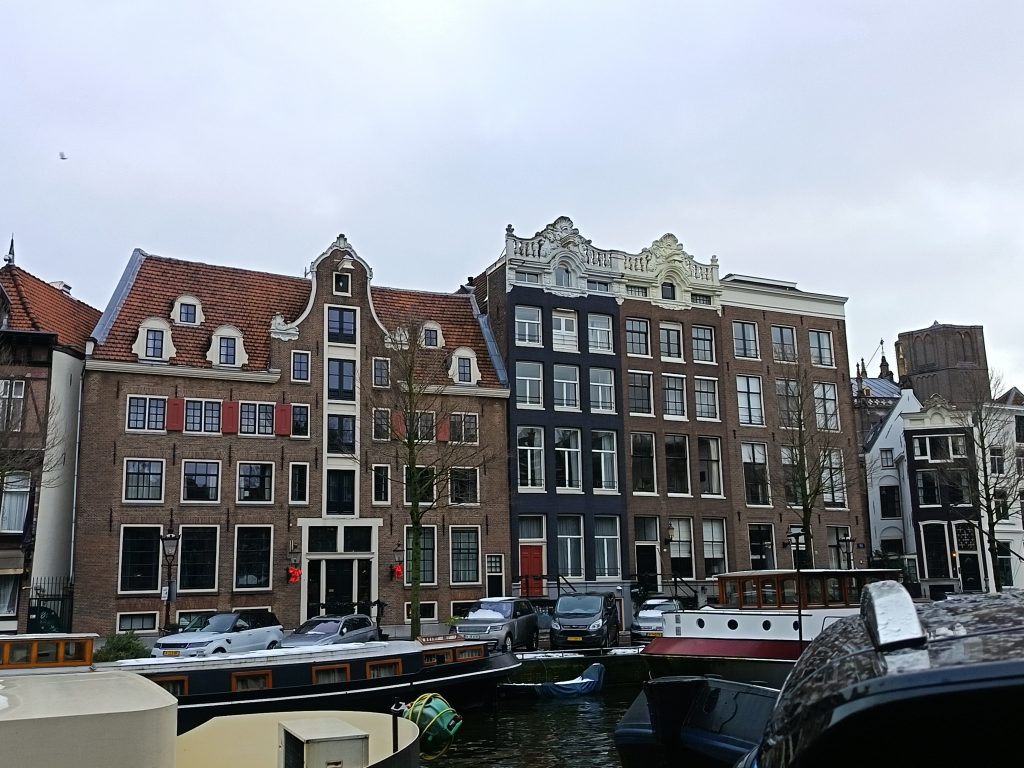
- Zurich – Basel – Luxembourg – Brussels – Rotterdam – Amsterdam
- Zurich – Bern – Girona – Barcelona
Both are overnight journeys, meaning that you leave in the evening and wake up at a reasonable time at the end destination. I went from Amsterdam to Zurich, and it was around 12 hours in total, leaving at 8pm and arriving a little after 8am in Switzerland.
They describe the first one as their “business route”, as it connects the major Western European business hubs, and the second as their more “holiday route”.
While there are plenty of trains connecting the first set of destinations, there are no direct trains from Zurich to Barcelona, making this one of the only flight-free options between these destinations.
What Makes Twiliner Different?
Of course, across Europe, we already have long-distance buses like FlixBus, Bla Bla Bus, National Express, and more. So, what makes Twiliner different?
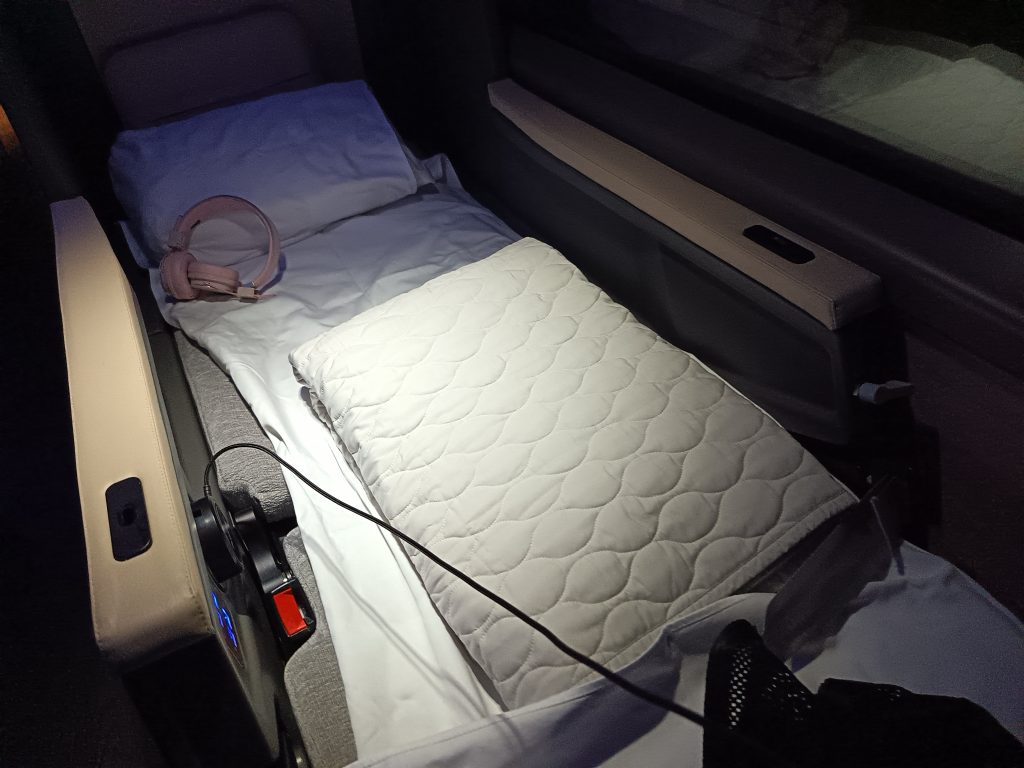
Fundamentally, it’s the seats. Twiliner has just 21 seats on board its double-decker setup. Most are upstairs, and they’re made using adapted versions of lie-flat business class airline seats. They’re the only bus in Europe with safe, lie-flat seats as they have an extra belt and an almost sleeping bag-like foot cover to keep you safe while you sleep.
From a sustainable standpoint, you save up to 91% CO₂ by riding with Twiliner versus flying between their destinations. So, if you’re looking to minimise your carbon footprint, this is a great way to go about it and still be comfortable.
It also had more premium onboard features, which are always nice, but more about that further down.
What’s The Cost Of Twiliner?
The cost of Twiliner varies depending on the date and your destinations. The cheapest I’ve seen from Amsterdam to Zurich is 150CHF (£139) one-way. For Zurich to Barcelona, the lowest one-way price I’ve seen is 156CHF (£145).
This obviously isn’t cheap. If you just want a sleeper bus between Amsterdam and Zurich and aren’t fussed about lie-flat seats, you can book a direct FlixBus in advance for as low as £45.99.
Of course, this doesn’t have all the bells and whistles of Twiliner, and you’re unlikely to have a decent night’s sleep upright on a FlixBus.
If you want direct public transport and lie-flat seating, there’s a direct Nightjet train between Amsterdam and Zurich. Again, prices vary, but they can be anywhere from €55 to €230+ for a bed in a shared couchette. So, depending on the day and popularity, it could be much cheaper or much more expensive than Twiliner.
Of course, the magic for the Barcelona route is the lack of overland competition. If you don’t want to fly, don’t want airport stress, but want to sleep while you travel, then the Twiliner route is a good option. Price-wise, one-way flights are around £100 between Zurich and Barcelona, so it’s not far off. However, it takes 14 hours and 15 minutes by Twiliner, rather than 1 hour and 45 minutes by plane. Even adding airport time into the mix, it’s almost three times as long.
Finding The Twiliner Bus in Amsterdam?
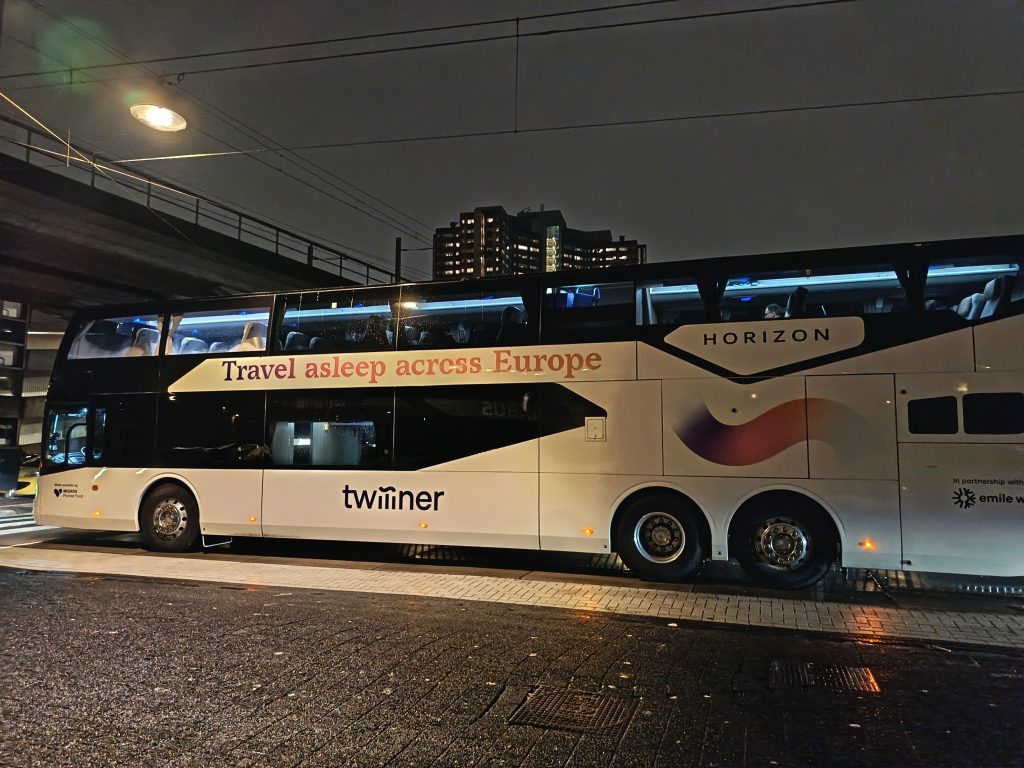
The bus terminal for Twiliner is Amsterdam Sloterdijk. It’s around a 10-minute train ride from Centraal Station, and then you walk around the back of the train station to get to the bus station.
The issue is that the bus station is huge. There are a huge number of FlixBuses there, and I was given no further information other than the bus station itself. After some wandering around in the dark of a January evening, I found the Twiliner-branded bus.
Realistically, they could do with a standard bay with some signs or coordinates for people to find the bus more easily. Bus stations aren’t the nicest places to be wandering around in the dark.
How Comfortable Is Twiliner?
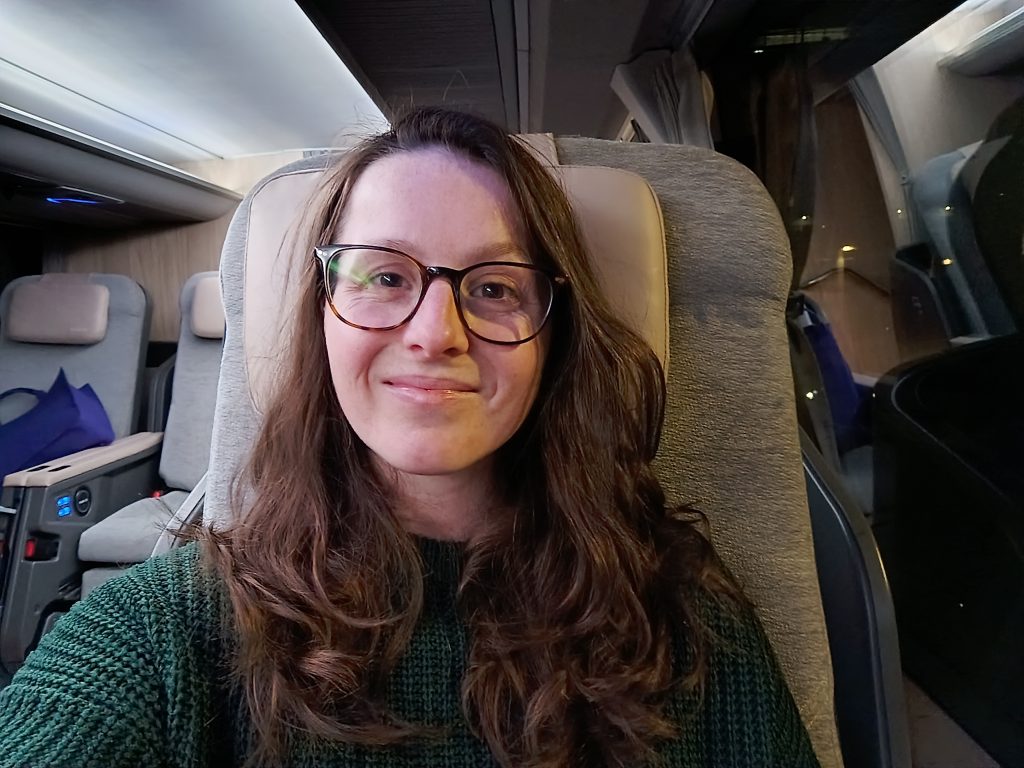
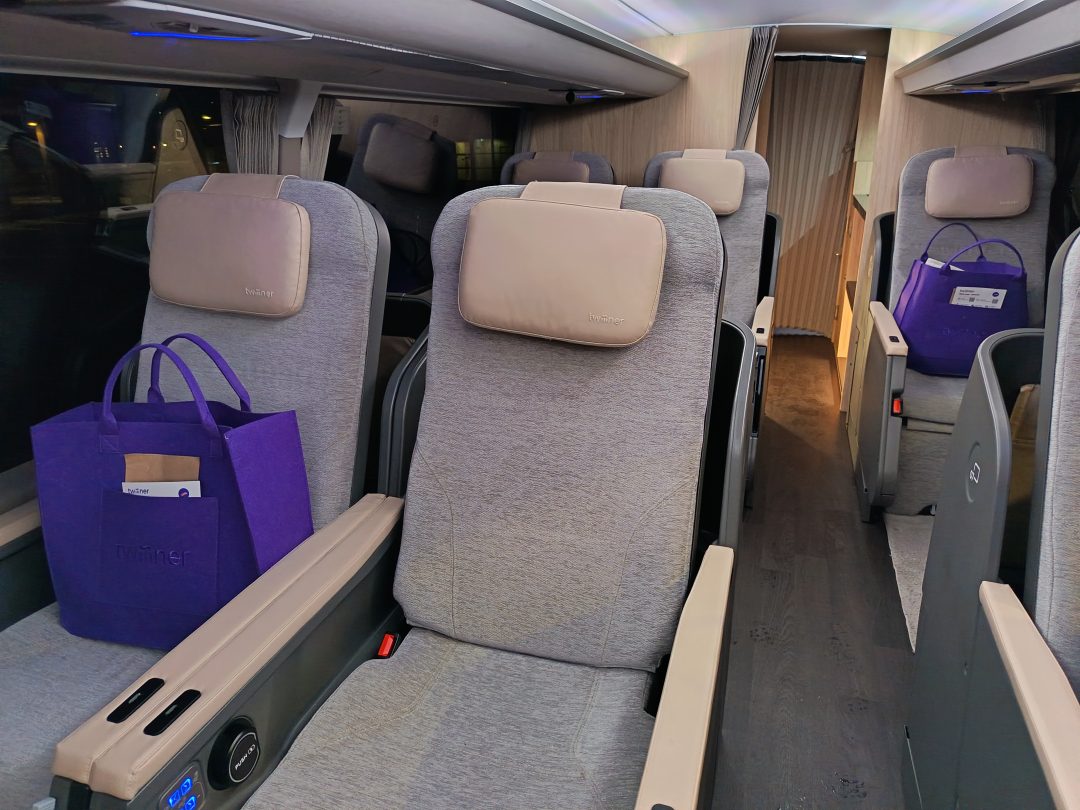
Once on board, I was pleasantly surprised by the design of the bus and the comfort level of the seats. Upstairs, they’re in a 1-2 configuration with the aisle in between. At the top of the stairs, there’s room for smaller backpacks and cases, while the bulkier luggage goes in the hold.
I’m only small at 5ft1, but the leg room was incredible. That’s for good reason, as the footrest comes up to combine with the reclining seat to form the full lie-flat experience. It’s a wide seat, with a pillow and a charging port in the seat. Overall, a comfortable seat in the upright configuration.
As a shorter person, I did have some issues with the lie-flat option as I had to shimmy down the seat to reach the legrest section properly. You also put your feet in a sort of bag that connects to the seat with seat belt clips. This stops you from shooting forward if the brakes slam on.
While Twiliner doesn’t list a specific bed length, other travellers who are 6ft2 have reported that they could also lie flat without any issue.
After a bit of moving about, it’s a comfortable sleeping experience. I could sleep both on my side and on my back, although the thickness of the seat isn’t the best for lying on your side for a prolonged time.
Just remember to lean away from the window, as, especially in the winter months, some drops of condensation dripped on me as I was trying to sleep, which wasn’t great!
What Amenities Are Onboard A Twiliner Bus?
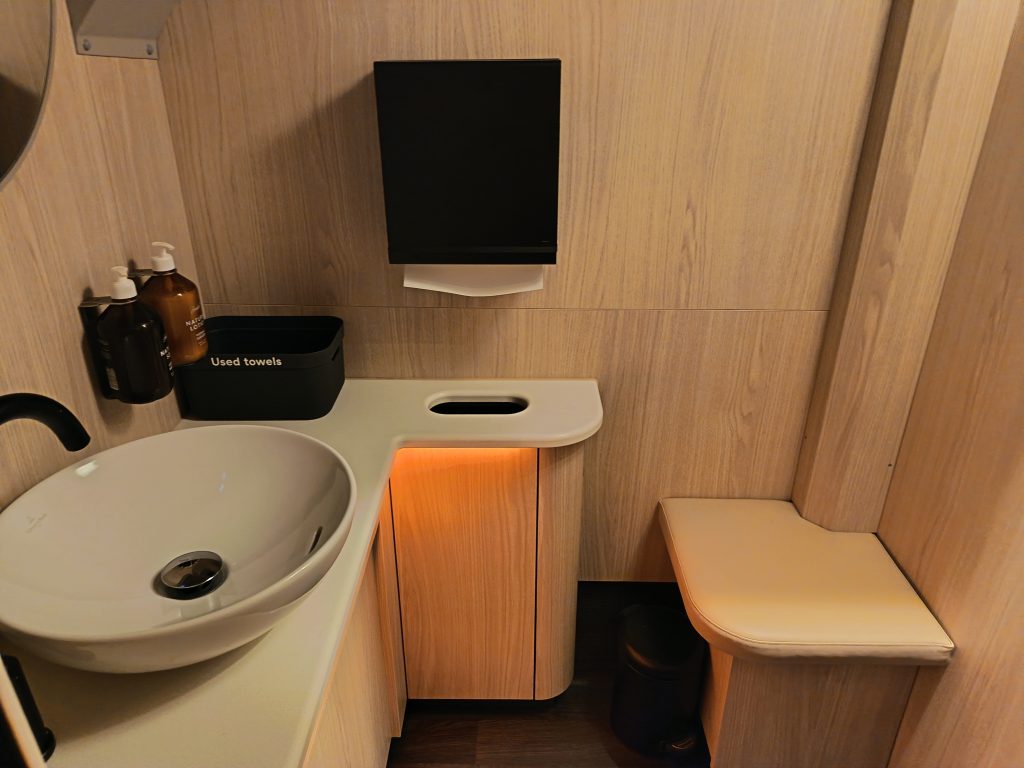
As you might expect with a high-end sleeper bus, there are plenty of great amenities on board. There’s a modern toilet with a separate changing room. This has lovely products and moisturiser in it, which is a nice touch.
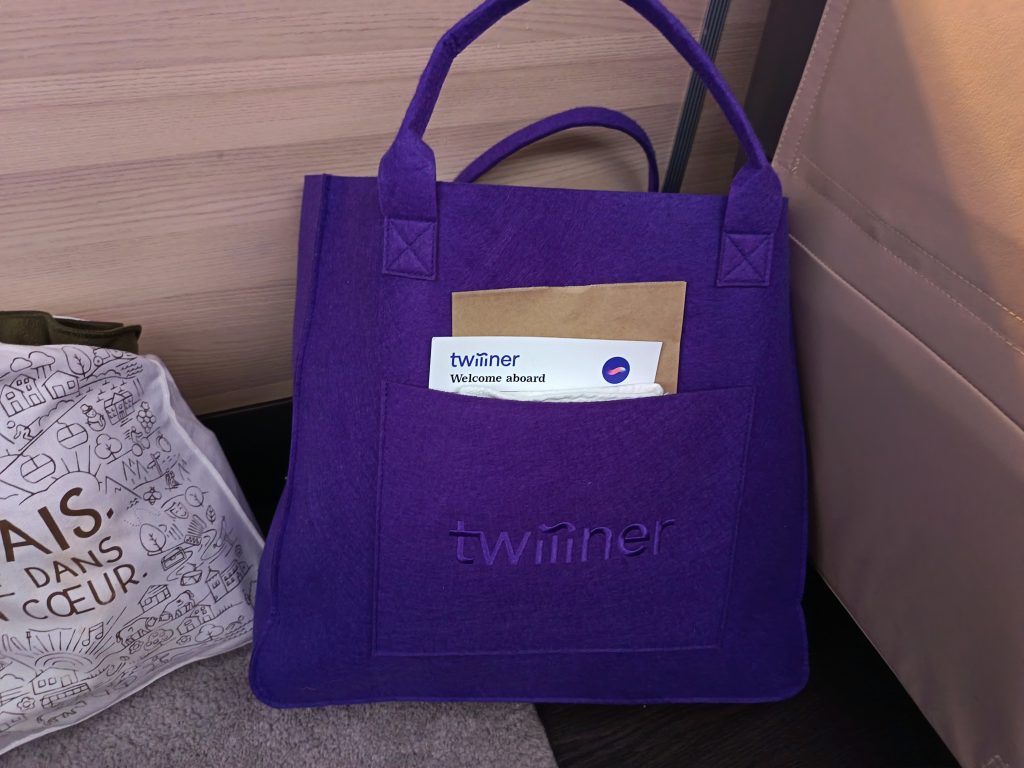
There’s free WiFi and a USB charging port in every seat. The WiFi is okay; it’s not great for streaming, so you might need your eSIM data or download shows in advance. You also get pillows and duvets and a bag to pop your stuff in. There’s a flap in the seat in front where you can put away your shoes, which is a thoughtful bit of design.
By the door, you’ll find a small kitchenette. Here, you can take advantage of the free water and coffee, or purchase snacks and drinks (alcoholic and non-alcoholic) via a QR code. These are offered at Swiss prices, so they’re not cheap, but if you fancy a treat on board, it’s good to have the option.
Do You Actually Sleep On A Twiliner Bus?
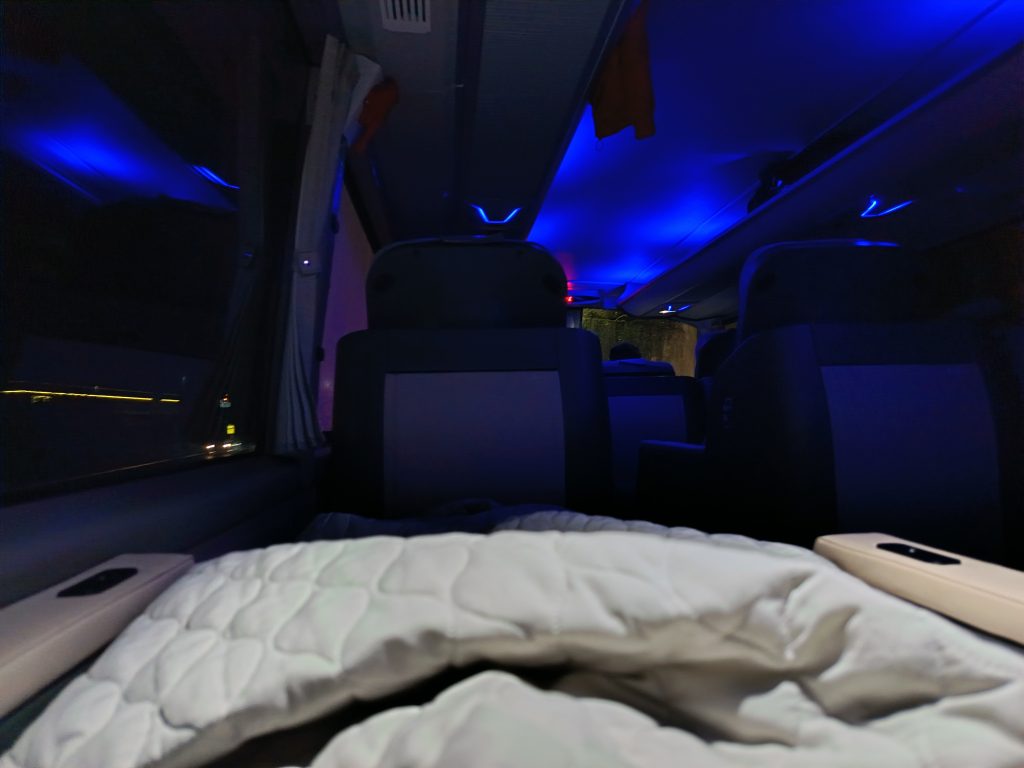
The big question is, do you actually sleep on a Twiliner bus, and the answer is yes. I got a decent amount of sleep, considering we were driving the whole night. I did occasionally wake up as we came off the motorways and through cities with more speed bumps, corners, and traffic lights, as you get jolted slightly.
However, overall, compared to overnight trains and ferries, I got a decent night’s rest. I’ve tried to do the same on FlixBus and National Express before, and it definitely wasn’t as successful. Even some overnight flights have been less comfortable, with worse sleep quality.
Conclusion: My Honest Review of Twiliner?
Overall, my trip on Twiliner was a great experience, and I’d recommend it to anyone who doesn’t want to fly across Europe. That being said, the cost versus sleeper trains on the same route might put some people off. I think the Zurich to Amsterdam route is generally quite saturated with the Nightjet train, and you sometimes get a private cabin for less than a seat on the Twiliner.
Where I think Twiliner will flourish is on niche routes, like their Zurich to Barcelona route, where there is no sleeper train alternative. While it’s way longer than the flight, for people who want to reduce their carbon footprint or hate airports, it’s good to have direct options connecting major European cities.

Why no mention of the bed length? Not all travelers are small women, tall men travel, too. And lying only on your back while sleeping? That can be hard. Give us a real practical review for all travellers.
Hey, the reason for no measurements is that no official measurements have been given by Twiliner and I didn’t go on with a tape measure, hence why I’ve shared my experience. I’ve seen that 6ft2 travelers have slept completely flat online and added this into the review, thanks for your notes.
The lie-flat seating sounds like a genuinely interesting alternative to sleeper trains, especially for flight-free travel across Europe. I’m curious how comfortable the overnight journey was in practice and whether Twiliner’s routes can compete with trains on price and convenience.
I’m curious how Twiliner’s comfort held up over the full overnight journey, especially compared with taking a train or flying from Amsterdam. The sustainability angle sounds promising, but the real test seems to be whether you actually arrive rested.
The lie-flat seating sounds like a genuinely interesting alternative to short-haul flights, especially for overnight routes across Europe. I’m curious how comfortable the ride was in practice compared with a sleeper train, particularly when it comes to noise and sleeping through the journey.
The lie-flat seating sounds like a genuinely interesting alternative to sleeper trains, especially for making flight-free travel across Europe more accessible. I’m curious how comfortable the overnight experience was in practice and whether Twiliner’s routes can compete with trains on both price and convenience.