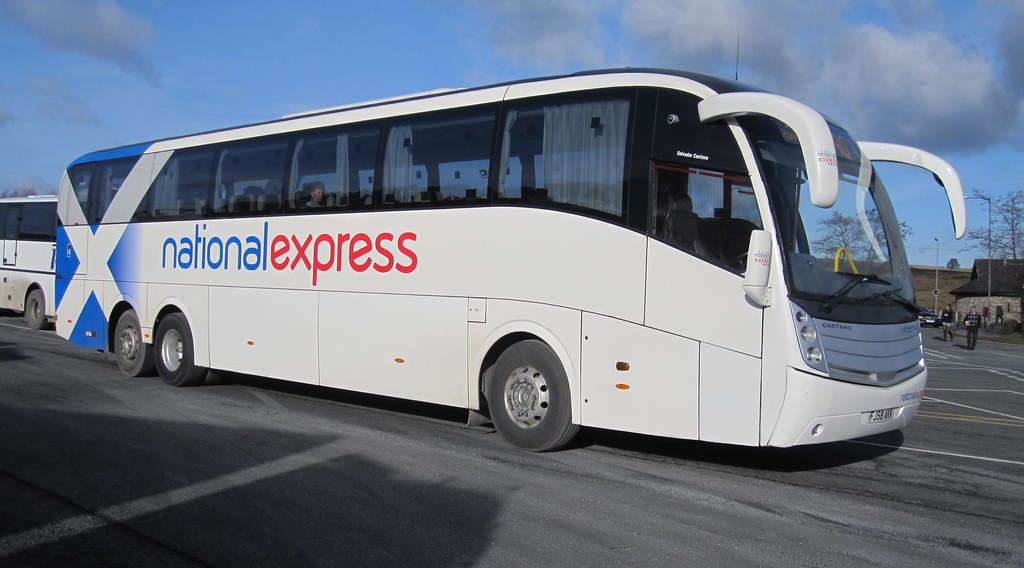
If you’re anything like me, you’re always on the lookout for budget travel options. In the UK, that usually means coaches and long-haul buses. I’ve already shared my thoughts on FlixBus, but now it’s time for my honest review of National Express.
As the arguably original coach offering around the UK, National Express has one of the biggest networks in the country. It’s a budget-friendly staple and a great alternative to the UK rail network. Of course, UK trains are not only expensive but often unreliable.
However, coach travel is not without its quirks. It often takes a lot longer than the trains, so you have to factor your time into the cost-benefit analysis before you book. So, I’m going to break down the National Express experience into various categories to see how it shapes up. Let’s dive in.
Route Options
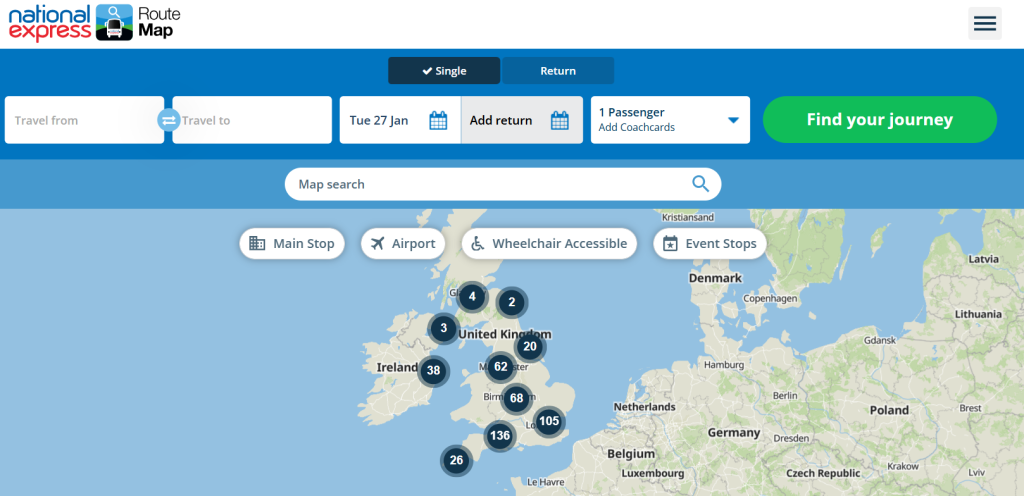
First things first, the route options. At the time of writing, there are 464 stops across the UK and Ireland on National Express’s route map. This is a huge number of destinations. However, it’s worth saying that certain cities have two or three stops where others have none.
For example, there are five separate stops in Liverpool. However, places like Wrexham, Chelmsford, Salisbury, and Stafford don’t have any stops at all. While obviously, these aren’t as popular or large as Liverpool, having one stop wouldn’t go amiss, especially considering that many routes pass close-by.
Essentially, the route options are great if you’re in a major city. I’ve used National Express between Liverpool and London a few times to avoid expensive trains, and it works a treat. However, if I were going somewhere niche, or slightly outside of the Liverpool to Leeds or Liverpool to London route, I’d have to change either at Manchester or Birmingham.
If you want to get to natural spaces, like the Peak District or the Lake District, there are stops in places like Penrith and Sheffield, but you’d still have to connect through local buses or trains to get to the main outdoorsy regions.
The coaches also connect at major motorway rest stops and at ferry ports, so if you’re combining your journey with other methods or there’s a route passing close to your town or city, but doesn’t stop there, you may be able to get a cheap taxi to the motorway junction.
Getting to and from airports
I use National Express a lot for one key route. There’s a direct trip from Liverpool to Manchester Airport that runs all through the night. This is incredible because there are only a handful of direct trains between Liverpool and Manchester Airport. Most of the time, you have to go into Manchester itself to change, meaning the journey often takes an hour and a half.
By contrast, the National Express takes just under an hour and costs a fraction of the price. There are also journeys going to the airport at 3 am and coming back at midnight and 1.30 am. That’s ideal for those Ryanair flights that are always at awkward times.
National Express goes to:
- Manchester Airport
- Birmingham Airport
- Bristol Airport
- Heathrow T2, 3, 4, and 5
- Gatwick North and South
- Luton Airport
- Stansted Airport
Price
One of the best things about National Express is the price. At the moment, their cheapest fare is £4.80. That means that it is slightly more expensive than FlixBus, but in my opinion, they run better routes and a more frequent service.
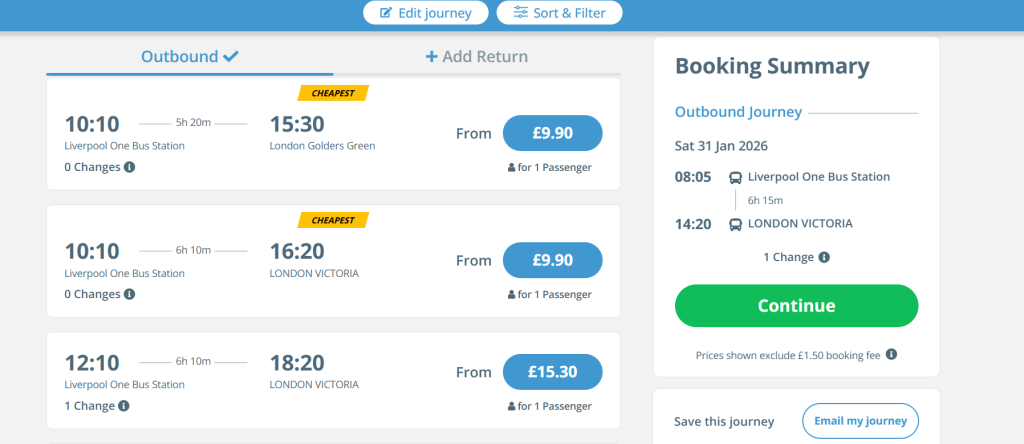
That being said, city-to-city routes are still ridiculously cheap, and that’s without a ton of advance notice. If I wanted to book a ticket from Liverpool to London this Saturday (in four days’ time), there are direct tickets for £9.90 one-way.
This route is six hours long, but the equivalent direct train, leaving around the same time, costs £56.50 one-way. While the bus is over twice as long (the train is two hours and 20 minutes), it’s under a fifth of the price.
Booking Process
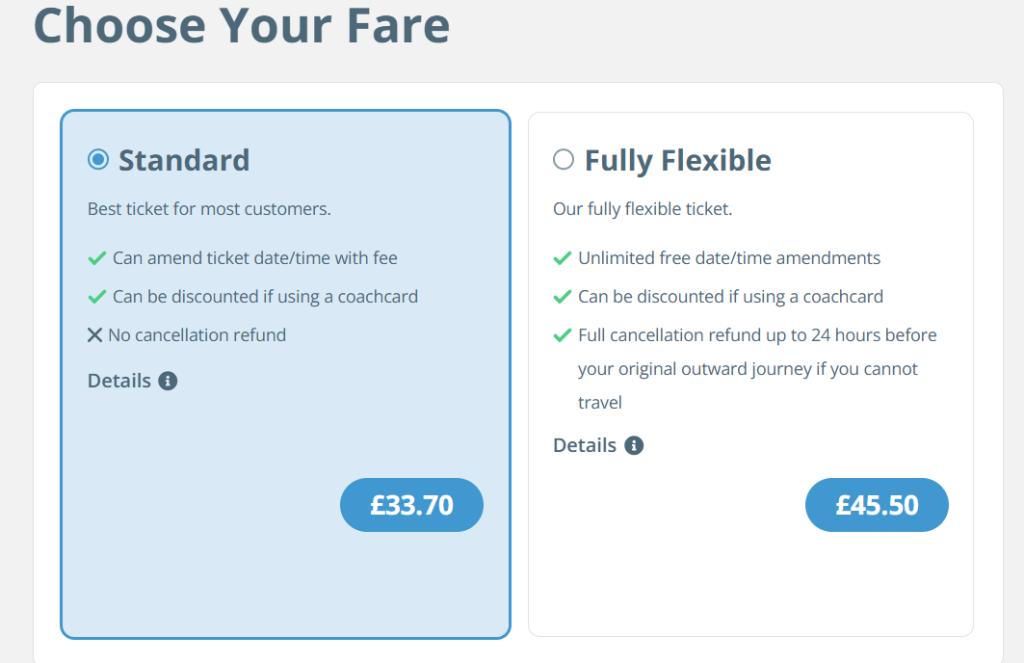
In terms of how smooth the booking process is, I have zero complaints. I would recommend making a free account, as they waive the booking fee if you have an account. It’s not a huge saving, but it’s an easy win.
You’ll search for the bus journey you want and select it. Next, you’ll be asked if you want a non-refundable or refundable fare. Of course, if you pick the latter, there’s an extra charge.
Next, you’ll get the standard add-on page. This has everything from seat selection to extra luggage. Keep in mind you can bring one bag on board and one large bag in the hold for free.
After that, you can pay and receive your e-ticket. You can access this in the National Express app, or you can get a PDF version sent to your email.
App
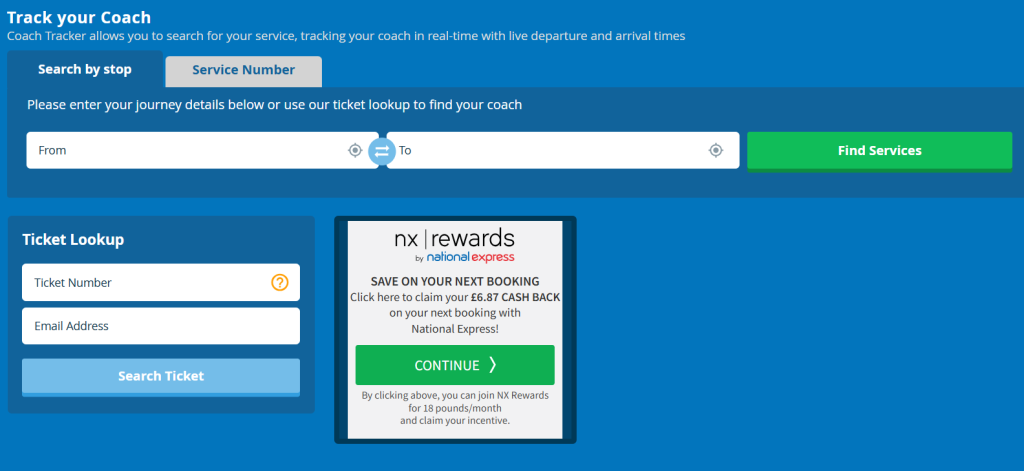
Honestly, I have seen better transport apps than National Express. It doesn’t have a huge range of functionality, but it does the job.
You have four main sections:
- Book Tickets
- Coach Tracker
- My Tickets
- Notifications
Realistically, you’re only using the first three sections. The booking process is pretty much identical to the website, and you can fly through that process. I’ve booked tickets on the app while running through Manchester Airport before.
The Coach Tracker is really useful if you’re waiting around and it’s seemingly running late. You can search by coach number or destination. However, I’d love to be able to access Coach Tracking directly from My Tickets as well.
When you have your bookings in the app, you have to manually track separately, rather than doing it together, which you can do in popular train apps. It’s a small thing, but it would make the app more user-friendly.
Timings
One of the key things that people don’t love about coach travel is the timings. Aside from it being a slower way to travel, they don’t always line up with peak times. This is mostly because the coaches end up being stuck in the rush hour traffic with the rest of the country.
However, personally, I think the timings for National Express are really good. Unlike FlixBus, they have multiple journeys on set routes per day, which gives you more options. I also like that they have night buses, so you can arrive at your destination after a decent snooze.
Additionally, the fact that they’re catering to the budget airline timings is excellent. Before, you’d have to travel on the last train of the evening and camp out in the airport, or pay through the nose for car parking or an airport taxi.
I will say that some of the night journeys mean being at the bus stop or station in the middle of the night, which can feel pretty sketchy. However, with a lack of budget-friendly alternatives, it’s a price to weigh up for you individually.
On-Board Experience
When you step onboard a National Express bus, you’ll find relatively comfortable leather chairs, a footrest, and a working USB charging point. While most buses say they have WiFi, it’s not the best. It’s definitely improved in recent years, but I’d download some shows or podcasts before you travel.
Most coaches also have toilets, especially on the longer journeys. These are either positioned in the middle or at the back of the coach, depending on the vehicle.
In terms of leg room, I’m not the best judge at 5ft1, but the seats and legroom are definitely roomier than a Ryanair flight. It’s not business class luxury, but it’s comfortable enough that you can get a decent nap on a longer route, or on an overnight journey.
The driver also tends to shout out the stops on the microphone, so it’s hard to miss your stop. However, if you have headphones on or you’re a deep sleeper, it’s worth keeping an eye on your location if you’re not staying on until the end of the line.
Add-Ons
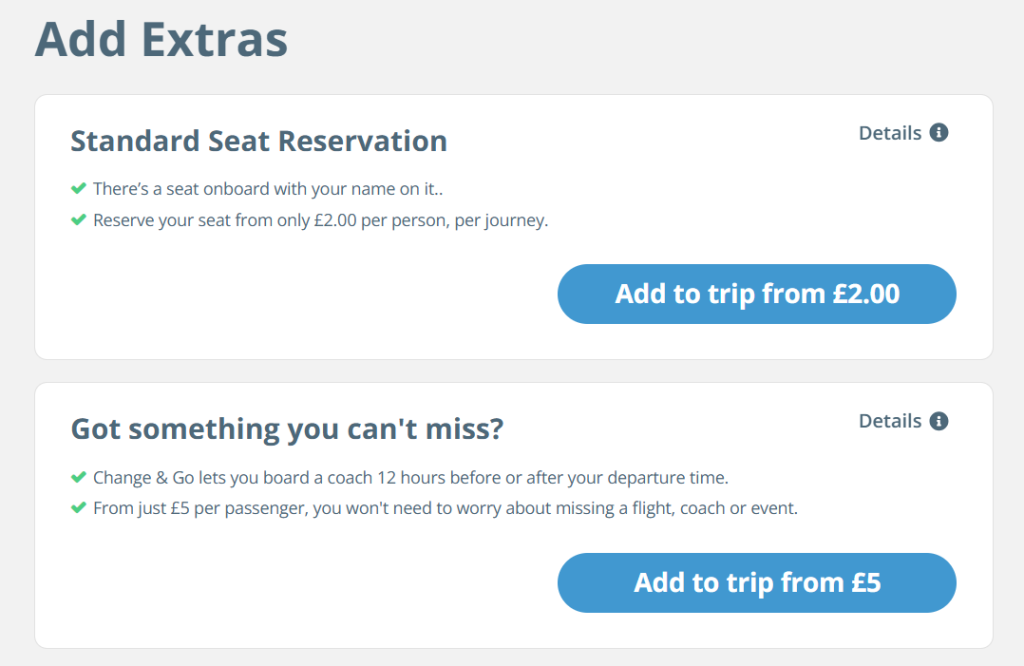
In terms of add-ons, there are a few options when you book your National Express ticket. You can reserve a seat, add baggage, add insurance, and make charity donations. You can also opt for a flexible fare if you’re not sure that you’ll make that particular coach.
Honestly, I have not used any of these, other than the donation. I have existing travel insurance, and the two included bags (one cabin, one hold) are plenty for me. As I’m usually traveling solo, the seat selection doesn’t bother me, and if you’re traveling from the origin point, there are usually plenty of open seats to choose from.
The flexible ticket option is often useful if you know the timings are going to be tight, but the bus looks like it’s getting full. This is good for airport routes or popular routes, like long-haul ones to London for specific events. It can help protect you. However, I just err on the side of caution and give myself a buffer if I’m unsure. Alternatively, I’ll book last-minute when I know if I’m going to be on-time or not; however, this is a risk.
Stops and Stations
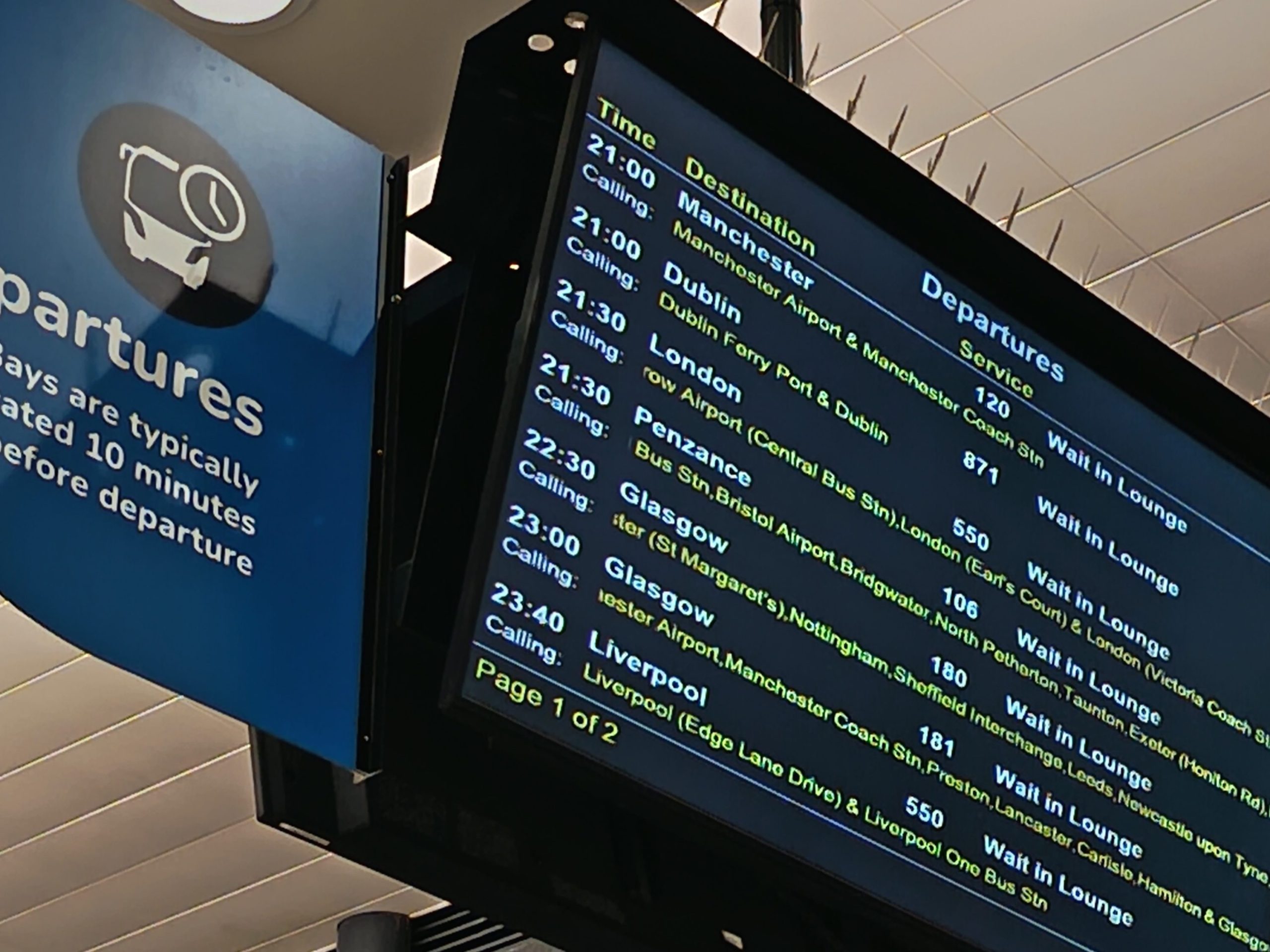
Let’s be honest, bus stations are rarely the nicest places in a given town or city. They’re normally on the outskirts of a city and can be cold and poorly lit. However, most of the main stations have security and cameras, as well as lighting.
The stops on the way to and from the major stations and cities are usually your standard bus stops. There is a signpost and sometimes a bus shelter, usually under a street light. These can be difficult to find, but you should get a map reference when you book.
If you can, book from a bus station rather than a stop for safety and security. You’ll also normally have seats, update screens, and more people around, which can be reassuring.
My Honest Review of National Express

So, overall, my honest review of National Express is pretty great. While it’s not the flashiest way to travel, and it’s certainly not the fastest, it’s great for budget-friendly travel in the UK. Of course, it’s a lot more convenient if you’re traveling between cities, as the rural and smaller town connections are few and far between.
Compared to FlixBus in the UK, National Express has a lot more routes on offer. While FlixBus is cheaper, you have more flexibility and options with National Express. So, if you’re traveling around the UK and want to avoid the high train fares, check out National Express.

Thanks for your honest review of National Express. As someone who often travels on a budget, I appreciate hearing about real experiences with UK buses. It’s helpful to know what to expect before booking a trip.
As someone who frequently travels between cities, I find the price of National Express unbeatable. But the lack of stops in some areas can be a bit of a hassle.
National Express is a lifesaver for budget travel between major cities, but the time trade-off is real—six hours from Liverpool to London for £10 is hard to beat, though I’d only recommend it if you’re not in a hurry.
Travelling from Bolton to London often to get to QPR games can get quite expensive on the train.
Thats why I get National Express!